


Why Do Automotive Companies Choose PUR Hot Melt Adhesive Machines?
2026-03-27 10:35In today’s automotive manufacturing environment, bonding technology is no longer a secondary process—it is a structural decision. As vehicles evolve toward lightweight materials, multi-layer composites, and higher safety standards, traditional fastening and adhesive methods are increasingly challenged.
This is where PUR Hot melt glue machines have gained significant traction. Compared with conventional bonding systems, PUR (polyurethane reactive) technology offers superior performance in durability, sealing, and environmental resistance. For many OEMs and Tier 1 suppliers, investing in a high-performance PUR hot melt adhesive machine is no longer optional—it is strategic.
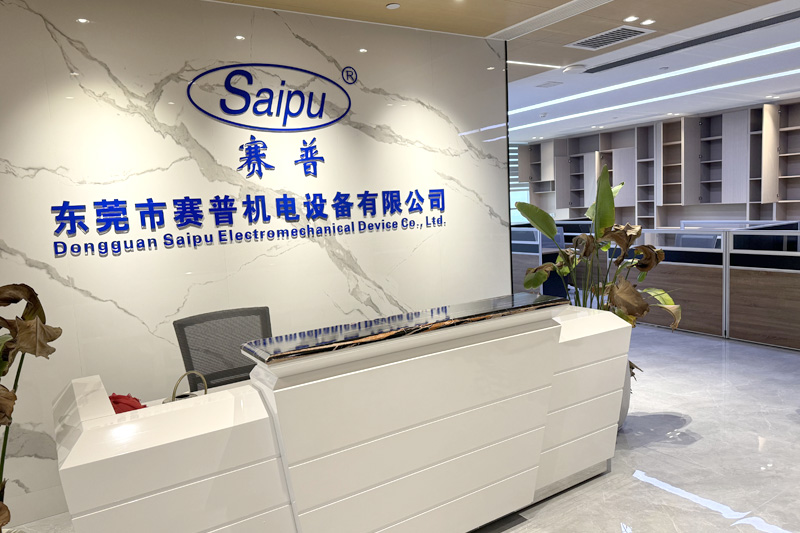
As a professional manufacturer of advanced glue spraying equipment, Saipu Electromechanical has witnessed this shift firsthand. Automotive companies are not simply upgrading equipment—they are redefining bonding standards.
What Makes PUR Technology Different?
The Science Behind PUR Adhesives
Unlike standard thermoplastic adhesives, PUR adhesives undergo a dual bonding mechanism:
Thermal melting for initial application
Chemical cross-linking with moisture in the air for long-term curing
This means that once applied by PUR glue machines, the adhesive continues to strengthen over time, forming a bond that is both flexible and highly durable.
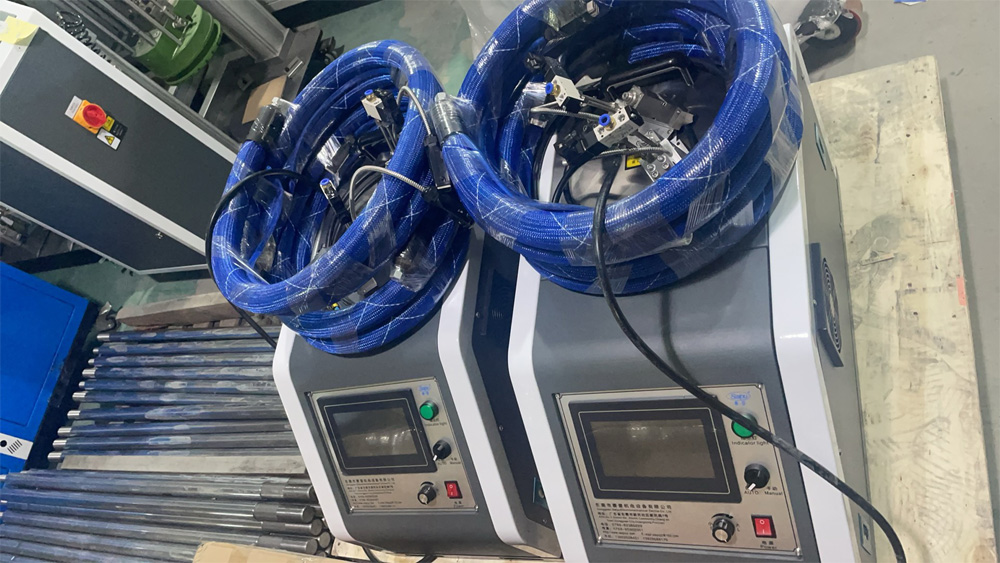
A modern PUR hot melt adhesive machine precisely controls temperature, pressure, and flow rate to ensure consistent application and optimal curing conditions.
Why Automotive Manufacturers Prefer PUR Hot Melt Systems
1. Exceptional Bond Strength for Complex Materials
Modern vehicles use a combination of materials—plastics, metals, glass, foams, and composites. Traditional adhesives often struggle to maintain consistent bonding across such diverse substrates.
PUR Hot melt glue machines provide:
High initial tack
Strong final bonding strength
Compatibility with multi-material assemblies
This makes them ideal for applications such as:
Car interior panels
Headlamp assembly
Windshield bonding
Door sealing systems
2. Superior Resistance to Temperature and Environment
Automotive components must withstand extreme conditions:
High temperatures under sunlight
Freezing conditions in winter
Moisture and humidity
Chemical exposure
A PUR hot melt adhesive machine applies adhesives that develop strong resistance to heat, cold, and water after curing.
Compared to standard systems, PUR glue machines significantly improve long-term product reliability.
3. Improved Sealing Performance
Sealing is critical in automotive manufacturing, especially for:
Windshields
Headlights
Electronic housings
Trunk and door systems
Glue spraying equipment based on PUR technology ensures:
Airtight sealing
Waterproof performance
Reduced risk of leakage
This is one of the main reasons automotive manufacturers increasingly adopt PUR Hot melt glue machines.
4. Enhanced Production Efficiency
Speed matters on automotive production lines. Every second saved translates into significant cost reduction.
A well-designed PUR hot melt adhesive machine offers:
Fast initial bonding (no clamping required)
Precise adhesive control
Reduced rework rates
Compared to traditional bonding methods, PUR glue machines streamline production processes while maintaining high quality.
5. Clean and Controlled Application
Automotive manufacturing demands high cleanliness standards, especially in visible components.
Advanced glue spraying equipment ensures:
Minimal adhesive stringing
Accurate dispensing
Reduced contamination
This allows manufacturers to maintain both aesthetic quality and functional performance.
Industry Analysis: PUR vs Traditional Adhesive Systems
| Parameter | PUR Hot Melt Systems | Traditional Hot Melt | Cold Glue Systems |
|---|---|---|---|
| Bond Strength | Very High | Medium | Low–Medium |
| Environmental Resistance | Excellent | Moderate | Low |
| Curing Mechanism | Moisture reactive | Cooling only | Drying/chemical |
| Production Speed | High | High | Low |
| Application Precision | High | Medium | Medium |
| Suitable for Automotive Use | Excellent | Limited | Rare |
| Long-Term Durability | Outstanding | Moderate | Low |
This comparison highlights why PUR Hot melt glue machines are becoming the preferred solution in automotive applications.
Typical Automotive Applications of PUR Glue Machines
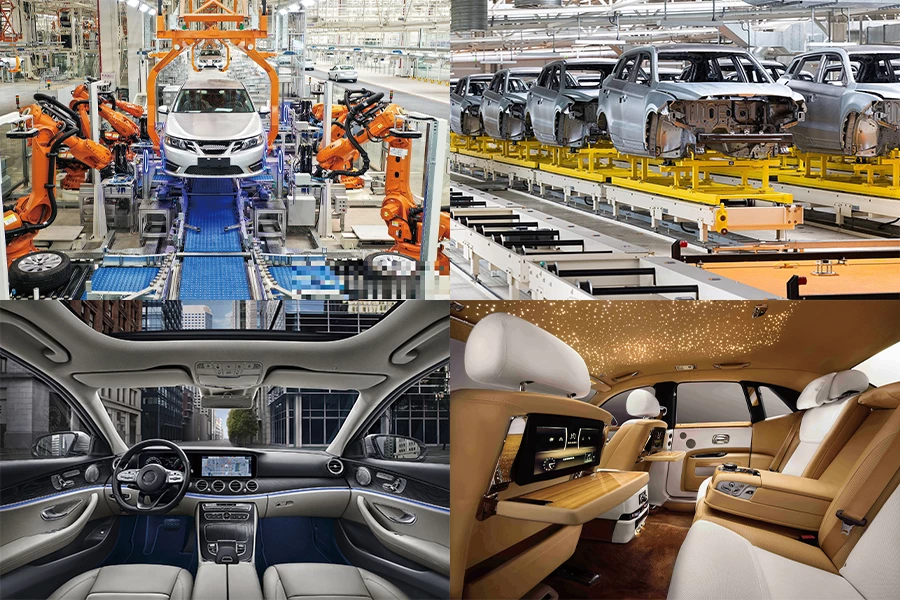
Automotive manufacturers use PUR glue machines across multiple production stages:
Interior Systems
Dashboard assembly
Seat bonding
Door panel lamination
Exterior Components
Headlight sealing
Emblem bonding
Trim attachment
Structural and Semi-Structural Areas
Windshield bonding
Roof lining
Sound insulation materials
In each of these applications, a reliable PUR hot melt adhesive machine ensures consistent performance and long-term durability.
Why Saipu Electromechanical Stands Out
As a professional supplier of glue spraying equipment, Saipu Electromechanical focuses on delivering high-performance solutions tailored to industrial needs.
Our PUR Hot melt glue machines are designed with:
Stable temperature control systems
High-precision gear pumps
Durable hose and nozzle configurations
User-friendly control interfaces
In addition, our PUR hot melt adhesive machine solutions are engineered for integration into automated production lines, supporting modern manufacturing requirements.
With extensive experience across industries—including automotive, packaging, electronics, and hygiene—we understand how to optimize adhesive application for different production environments.
FAQ: What Automotive Manufacturers Want to Know
Q1: Why is PUR better than traditional hot melt adhesives?
PUR adhesives provide both immediate bonding and long-term chemical curing, making them stronger and more durable than traditional options.
Q2: Are PUR glue machines difficult to maintain?
Not necessarily. Modern PUR glue machines are designed for easy maintenance, though regular cleaning and proper handling are essential due to the reactive nature of PUR adhesives.
Q3: Can PUR hot melt adhesive machines handle high-speed production?
Yes. A well-configured PUR hot melt adhesive machine can easily meet the demands of high-speed automotive production lines.
Q4: Is PUR suitable for all automotive applications?
While highly versatile, PUR is especially effective for applications requiring strong bonding, sealing, and environmental resistance.
Q5: How do I choose the right glue spraying equipment?
Key factors include production speed, material compatibility, adhesive type, and precision requirements. Working with experienced manufacturers ensures the best results.
The Future of Adhesive Technology in Automotive Manufacturing
As vehicles continue to evolve—with trends such as electrification, lightweight design, and smart components—bonding technologies must keep pace.
PUR Hot melt glue machines are well-positioned to meet these demands due to their:
Strong adhesion to diverse materials
Resistance to harsh environments
Compatibility with automated systems
For manufacturers aiming to remain competitive, upgrading to advanced PUR glue machines is becoming a necessary step.
Call to Action
If your automotive production line requires stronger bonding, better sealing, and higher efficiency, it may be time to consider upgrading your adhesive system.
Saipu Electromechanical offers customized PUR hot melt adhesive machine solutions designed to meet the demanding standards of modern automotive manufacturing.
Conclusion
The shift toward PUR Hot melt glue machines in the automotive industry is driven by real performance needs—stronger bonds, better sealing, and higher efficiency.
Compared with traditional systems, a modern PUR hot melt adhesive machine delivers measurable advantages in durability, productivity, and product reliability.
As a trusted provider of industrial glue spraying equipment, Saipu Electromechanical is committed to helping manufacturers achieve these benefits through innovative technology and dependable service.
In a competitive industry where quality and efficiency define success, choosing the right adhesive system is more than a technical decision—it is a strategic investment in the future.