


Why Do Many Factories Suffer Huge Adhesive Waste When Running 5-Gallon PUR Hot-Melt Machines in High-Humidity Workshops?
2026-08-27 10:03For many factories using PUR hot-melt adhesives, adhesive waste is not always caused by excessive application.
Sometimes, the real problem begins inside the adhesive drum before the glue even reaches the spray gun.
This becomes particularly important in workshops with high humidity, frequent adhesive changes, long production shifts, or open-container handling. Once moisture enters a reactive PUR adhesive, the material can begin reacting prematurely. A layer of cured material may form on the surface, while prolonged exposure or excessive heat history can contribute to degraded or charred adhesive.
The consequences can spread through the entire adhesive delivery system: skin formation in the drum, unstable pumping, clogged filters, blocked hoses or nozzles, unplanned cleaning, production downtime and, in severe cases, an entire drum of adhesive being discarded.
For factories consuming PUR adhesive continuously, these losses can become surprisingly expensive.
This is why choosing a suitable PUR 5 gallon double plate hot melt glue machine is not simply a question of adhesive capacity. The machine's sealing strategy, heating control, adhesive delivery design and operating procedure all deserve attention.
Saipu Electromechanical Device Co., Ltd develops and manufactures hot melt adhesive spraying equipment for applications including mattresses, automotive interiors, packaging, leather goods, footwear, composite materials, edge banding, wrapping, courier bags, handle bags, bookbinding and air filtration.
This article explains how factories can reduce moisture-related PUR problems and make their adhesive application process more reliable.
1. The Real Problem: Why Does PUR Adhesive Waste Increase in Humid Workshops?
PUR hot-melt adhesive behaves differently from conventional thermoplastic hot-melt adhesives.
After application, reactive PUR adhesives can react with moisture and progressively cure. This characteristic provides strong final bonding performance, but it also means that unwanted moisture exposure during storage, melting and processing must be carefully controlled.
In a humid workshop, the risk becomes more obvious.
Consider a production drum that has been opened during operation.
If humid air reaches the adhesive surface, moisture can interact with the exposed PUR adhesive. Depending on the adhesive formulation and exposure conditions, a cured skin may gradually develop.
The operator may then encounter:
Moisture exposure → surface skin → adhesive instability → filtration/pumping problems → nozzle blockage → production interruption
If the problem is ignored, the material near the heating area can experience prolonged thermal exposure. Under unsuitable temperature or residence-time conditions, degraded material may accumulate and contribute to what operators commonly describe as PUR adhesive charring.
The result is not just wasted adhesive.
It can also mean:
More filter replacement
More hose cleaning
More nozzle maintenance
More pump maintenance
Longer machine downtime
More operator intervention
Unstable glue output
Higher production cost
For a factory manager, this is a process-control problem—not merely a glue problem.
2. Why Conventional Single-Plate Systems Can Become Challenging
A conventional single-plate PUR system can be perfectly adequate for stable, single-product production.
However, the production situation changes when the factory needs to replace drums frequently.
A typical workflow may look like this:
Finish Drum A
↓
Remove the empty or partially used drum
↓
Open the adhesive supply area
↓
Install Drum B
↓
Expose the adhesive during changeover
↓
Restart heating and pumping
↓
Check adhesive output
↓
Resume production
Every opening and changeover introduces another opportunity for moisture exposure.
This does not mean that every single-plate machine will automatically cause excessive adhesive waste. The actual risk depends on the machine's sealing structure, operating procedure, adhesive packaging, workshop humidity and adhesive formulation.
The important question for procurement teams is therefore:
How effectively does the equipment control moisture exposure during normal production and adhesive changeover?
That question should be included in the equipment specification—not left until a problem appears on the production floor.
3. What Is a PUR 5 Gallon Double Plate Hot Melt Glue Machine?
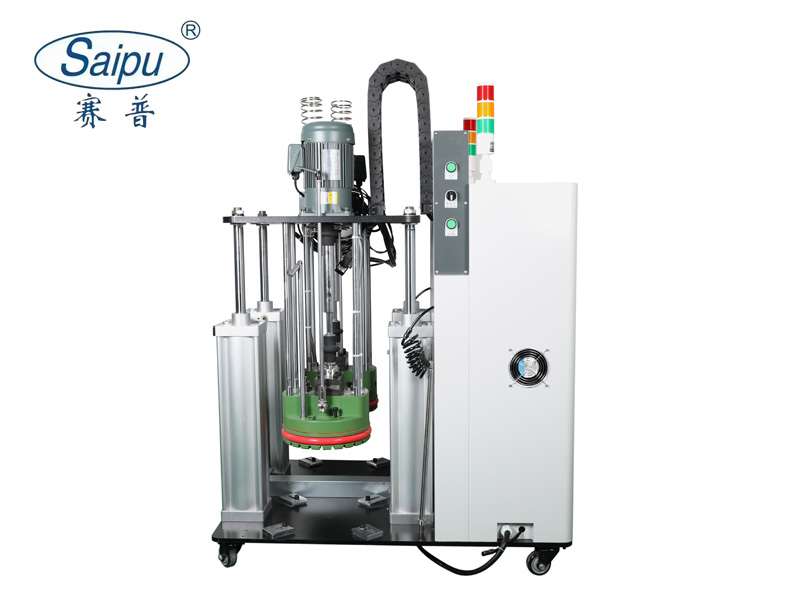
A PUR 5 gallon double plate hot melt glue machine is designed with two adhesive pressing/heating positions, allowing the production team to manage two adhesive sources within one equipment configuration.
For factories running multiple products, the dual-plate structure can provide additional flexibility.
More importantly for PUR applications, the pressing-plate and adhesive-contact structure can be designed to help minimize unnecessary exposure of the adhesive to ambient moisture.
The operating principle is relatively simple:
Plate A
Supplies PUR adhesive to the production process.
Plate B
Can be prepared for another adhesive drum according to the production schedule and equipment configuration.
This creates a more controlled workflow for adhesive replacement.
Instead of repeatedly exposing a large quantity of PUR adhesive during manual drum handling, the equipment can use a more enclosed adhesive-supply approach.
For factories operating in high-humidity PUR production, this design consideration can be particularly valuable.
4. How Does a Sealed Double-Plate Structure Help?
The key word here is moisture management.
A well-designed PUR system should minimize unnecessary contact between reactive adhesive and ambient air.
Saipu's double-plate configuration is designed around a more enclosed adhesive-supply concept. During normal operation, the pressing plate remains closely associated with the adhesive container, helping reduce the amount of adhesive directly exposed to workshop air.
This can help manufacturers work toward the objective to prevent PUR moisture curing before the adhesive reaches the application point.
However, equipment alone cannot completely eliminate moisture-related PUR curing.
Factories should also control:
Adhesive storage
Drum opening time
Workshop humidity
Heating temperature
Adhesive residence time
Hose temperature
Filter condition
Shutdown procedure
Drum replacement procedure
In other words:
A sealed machine design is one part of a complete PUR moisture-control strategy.
That is a much more realistic approach than simply claiming that a particular machine can “solve all PUR curing problems.”
5. Technical Parameters Buyers Should Evaluate
When purchasing PUR equipment for humid environments, buyers should look beyond the nominal drum capacity.
The following parameters deserve particular attention:
| Parameter | What Buyers Should Check | Why It Matters |
|---|---|---|
| Adhesive capacity | 5-gallon / approximately 19 L class | Determines working adhesive volume |
| Plate structure | Single or double plate | Influences changeover flexibility |
| Moisture protection | Sealing/contact design | Helps limit ambient moisture exposure |
| Heating control | Independent temperature control | Helps avoid unsuitable thermal conditions |
| Pump system | Pump type and output stability | Influences continuous adhesive delivery |
| Heated hose | Temperature stability | Prevents premature viscosity increase in the delivery path |
| Filter system | Accessible and suitable filtration | Helps control particles/degraded adhesive |
| Spray gun | Manual/automatic configuration | Determines application method |
| Nozzle | Application-specific design | Controls spray or bead pattern |
| Control system | PLC / digital temperature control | Supports repeatable operation |
| Serviceability | Cleaning and maintenance access | Influences downtime during maintenance |
The exact specifications should be selected according to the PUR adhesive manufacturer's technical data sheet and the customer's production requirements.
A higher-capacity machine is not automatically a better machine.
For PUR processing, moisture control + thermal control + adhesive delivery stability are often more important than capacity alone.
6. What Does PUR Adhesive Charring Actually Tell Production Engineers?
PUR adhesive charring should not simply be treated as a “bad glue” problem.
It can be a warning sign that the adhesive has experienced unsuitable processing conditions.
Potential contributing factors may include:
Excessive heating temperature
Excessive residence time
Repeated heating cycles
Moisture contamination
Adhesive remaining in heated components for too long
Inappropriate shutdown procedures
Contaminated filters or delivery components
For example, imagine a factory that stops production every evening but leaves adhesive sitting in heated components.
The machine may still be powered and heated even though no glue is being consumed.
Over time, adhesive residence time increases.
This can create an unnecessary thermal load.
Therefore, preventing PUR adhesive charring requires more than selecting the right melter. Production teams should establish appropriate heating, shutdown and cleaning procedures based on the adhesive manufacturer's recommendations.
7. Why High-Humidity PUR Production Needs a Different Purchasing Mindset
Many procurement teams focus on:
“How many kilograms per hour can the machine deliver?”
That is important—but incomplete.
For a humid workshop, another question should be:
How well does the equipment protect reactive PUR adhesive from unnecessary moisture exposure?
A useful procurement checklist includes:
Moisture Management
Is the adhesive container sufficiently enclosed?
How is the drum sealed during operation?
How is the adhesive protected during changeover?
Is the system designed for the customer's workshop environment?
Thermal Management
Can the temperature be controlled accurately?
Is the adhesive exposed to unnecessary heat for long periods?
Can different heating zones be controlled appropriately?
Delivery Stability
Is the pump suitable for the adhesive viscosity?
Is the heated hose properly matched?
Is filtration accessible?
Maintenance
How easy is it to inspect the adhesive path?
How are filters replaced?
What is the recommended shutdown procedure?
How should the equipment be cleaned?
This approach helps factories evaluate the total cost of ownership, rather than comparing machines only by purchase price.
8. Application Scenarios: Where Can Saipu PUR Equipment Add Value?
Saipu hot melt adhesive spraying systems are used across several industrial sectors.
Mattress Manufacturing
Mattress production may involve bonding foam, fabric and other layered materials.
A stable adhesive supply system can help manufacturers maintain consistent spray patterns while reducing unnecessary interruptions caused by adhesive delivery problems.
For high-volume mattress factories, equipment stability becomes particularly important because even a short interruption can affect an interconnected production line.
Automotive Interior Manufacturing
Automotive interiors may require adhesive application for:
Headliners
Interior fabrics
Acoustic materials
Trim components
Composite structures
These applications can demand repeatable adhesive distribution and controlled processing.
For automotive suppliers operating long shifts, preventing unnecessary pump, hose or nozzle blockages can be particularly important for maintaining line availability.
Air Filter Manufacturing
Filter production may involve bonding filter media, frames and sealing components.
The adhesive needs to be delivered consistently across the required application area.
A stable PUR supply system can help reduce variations caused by inconsistent adhesive temperature or delivery pressure.
Packaging
Packaging factories frequently switch between different product specifications.
Applications may include:
Paper bags
Carton packaging
Laminated structures
Handle bonding
Flexible packaging
When production orders change frequently, a double-plate design can also provide greater flexibility for adhesive management.
9. How Much Can a Factory Actually Save?
This is where procurement teams should be careful.
There is no universal percentage for PUR adhesive savings.
Actual savings depend on:
PUR adhesive price
Daily consumption
Workshop humidity
Number of drum changes
Existing machine design
Cleaning frequency
Downtime cost
Operator labor
Amount of adhesive discarded
A simple calculation can nevertheless help factories understand the potential economic impact.
Suppose a factory consumes:
20 kg of PUR adhesive per day
and the average adhesive cost is:
$4/kg
Daily adhesive consumption cost:
20 × $4 = $80
If poor moisture management results in only 5% of adhesive being discarded:
20 kg × 5% = 1 kg/day
That represents:
1 kg × $4 = $4/day
Over 300 production days:
$4 × 300 = $1,200/year
And this calculation does not include:
Filter replacement
Pump maintenance
Hose cleaning
Labor
Production downtime
Scrapped products
If the adhesive is more expensive or the production volume is substantially higher, the economic impact increases accordingly.
Therefore, factories should calculate their own baseline instead of relying on generic marketing claims.
10. How Can Manufacturers Prevent PUR Moisture Curing?
A machine can reduce risk, but operators still play a critical role.
To prevent PUR moisture curing, production teams should establish a complete operating procedure.
Step 1: Store Adhesive Properly
Follow the adhesive manufacturer's storage temperature and packaging requirements.
Step 2: Minimize Open Exposure
Do not leave reactive PUR adhesive unnecessarily exposed to workshop air.
Step 3: Control Workshop Conditions
Monitor temperature and relative humidity where practical.
Step 4: Use Correct Heating Parameters
Do not simply increase temperature to compensate for high viscosity.
Follow the adhesive supplier's recommended processing range.
Step 5: Avoid Excessive Residence Time
If production stops, use an appropriate shutdown procedure rather than allowing adhesive to remain unnecessarily heated.
Step 6: Monitor Filters
An increasing pressure differential or unstable adhesive flow can indicate contamination or curing material in the delivery path.
Step 7: Maintain the Nozzle
Remove cured material according to the equipment and adhesive manufacturer's recommended procedure.
These basic practices can significantly influence the service life and stability of a PUR adhesive system.
11. Why Choose Saipu Electromechanical Device Co., Ltd.?
For industrial adhesive equipment, purchasing a machine is only the first step.
The more important question is whether the supplier understands the application process behind the machine.
Saipu Electromechanical Device Co., Ltd. specializes in R&D, manufacturing, sales and after-sales service of hot melt adhesive spraying equipment.
Its application experience covers:
Mattress bonding
Automotive interiors
Packaging
Leather goods
Footwear
Composite materials
Edge banding
Profile wrapping
Courier bags
Handle bags
Bookbinding
Air filtration
This cross-industry experience allows Saipu to approach equipment selection from the application side rather than simply recommending a standard machine.
For a factory dealing with high-humidity PUR production, the evaluation can focus on:
Adhesive → Drum → Sealing → Heating → Pumping → Heated Hose → Spray Gun → Nozzle → Substrate
Every stage can influence final production stability.
12. A Practical Purchasing Checklist for Factory Managers
Before purchasing a PUR 5 gallon double plate hot melt glue machine, ask your supplier these questions:
About the Adhesive
What PUR adhesive brand and model will be used?
What is the recommended melting temperature?
What is the adhesive viscosity?
How sensitive is the adhesive to moisture?
About the Workshop
What is the typical relative humidity?
Is the machine installed in a climate-controlled area?
How frequently are adhesive drums replaced?
About Production
What is the required adhesive consumption per hour?
How many shifts are operated per day?
How frequently does production stop?
About the Equipment
How is the adhesive protected from ambient moisture?
How does the double-plate switching process work?
How are temperature and pressure controlled?
What maintenance is required?
How are filters, hoses and spray guns serviced?
A supplier that can answer these questions clearly is usually in a better position to recommend a suitable configuration.
13. Saipu's Factory-Level Solution
The objective of a professional PUR equipment supplier should not be to simply provide a melter.
The objective should be to help the factory create a stable adhesive application process.
For customers purchasing a PUR system, Saipu can support the project from several angles:
Equipment Selection
Match machine capacity and structure to adhesive consumption and production requirements.
Application Matching
Select the appropriate spray gun, nozzle and adhesive delivery configuration.
Process Commissioning
Adjust the equipment according to the customer's actual adhesive and substrate.
Production Integration
Help customers integrate the adhesive system with existing or new production equipment.
Technical Support
Provide guidance for operation, maintenance and troubleshooting.
This matters because the same PUR adhesive machine may behave very differently under different production conditions.
A mattress factory, automotive interior supplier and filter manufacturer may all use PUR, but their application requirements are not identical.
14. FAQ
Why is PUR adhesive particularly sensitive to humidity?
Reactive PUR adhesives can react with moisture. Uncontrolled exposure before application can cause premature curing or skin formation, depending on the adhesive formulation and environmental conditions.
What causes PUR adhesive charring?
Potential causes include excessive temperature, excessive residence time, repeated heating, moisture contamination and unsuitable operating or shutdown procedures. The adhesive manufacturer's technical data should be used to determine the correct processing conditions.
Can a double-plate system completely prevent PUR moisture curing?
No equipment should be described as completely eliminating the risk. A properly designed enclosed adhesive supply system can help reduce unnecessary moisture exposure, but adhesive storage, workshop humidity, operating procedures and maintenance remain important.
Why choose a double-plate design?
It can provide greater flexibility for adhesive drum management and production changeovers. It is particularly useful for factories handling multiple products or adhesive formulations.
Is a 5-gallon PUR machine suitable for high-volume production?
Capacity suitability depends on actual adhesive consumption, production speed and operating schedule. Buyers should calculate required adhesive throughput rather than selecting equipment based solely on drum size.
Can Saipu customize the PUR spraying system?
Equipment configuration can be discussed according to the customer's adhesive, substrate, application pattern, production line and automation requirements.
15. Conclusion: Moisture Control Is Part of Production Efficiency
When a factory loses PUR adhesive because of premature curing, the visible problem may be a clogged nozzle or pump.
But the underlying problem can start much earlier:
Moisture exposure → adhesive reaction → skin formation → degraded material → unstable delivery → maintenance → downtime → waste
For manufacturers working in humid environments, this chain deserves serious attention.
A properly configured PUR 5 gallon double plate hot melt glue machine can provide a more controlled adhesive-supply architecture, while the enclosed double-plate concept can help reduce unnecessary exposure of reactive PUR adhesive to ambient moisture.
Combined with correct temperature control, storage, shutdown procedures and routine maintenance, it can become part of a broader strategy to prevent PUR moisture curing, reduce adhesive waste and improve production reliability.
For mattress manufacturers, automotive interior suppliers, filter factories, packaging producers and other industrial users, the right question is not simply:
“How much does the PUR machine cost?”
A better question is:
“How much adhesive waste, maintenance and production downtime can the right adhesive system help us avoid?”
Saipu Electromechanical Device Co., Ltd. is ready to help manufacturers evaluate their PUR adhesive application requirements and develop a suitable hot melt spraying solution.
Looking for a PUR Hot Melt Solution for Your Factory?
Share your adhesive model, daily consumption, workshop conditions and application requirements with the Saipu team for a more precise equipment recommendation.
🌐 Website: Saipu Electromechanical Device Co., Ltd.