


What Production Advantages Can A Double-Plate Design Bring to Factories Switching Between Different PUR Adhesive Formulas?
2026-08-25 10:40For factories working with multiple products, changing the adhesive can sometimes be more disruptive than changing the product itself.
A packaging line may use one PUR adhesive for a particular substrate, while a leather goods line requires another formulation. Bookbinding, edge banding, furniture wrapping and other applications can introduce their own adhesive requirements. When a factory relies on a conventional single-drum PUR melting system, changing adhesive can mean stopping the line, removing the remaining glue, cleaning the delivery path and waiting for the equipment to reach a stable operating condition again.
The result is familiar to many production managers: downtime, adhesive waste, labor-intensive cleaning and lost production capacity.
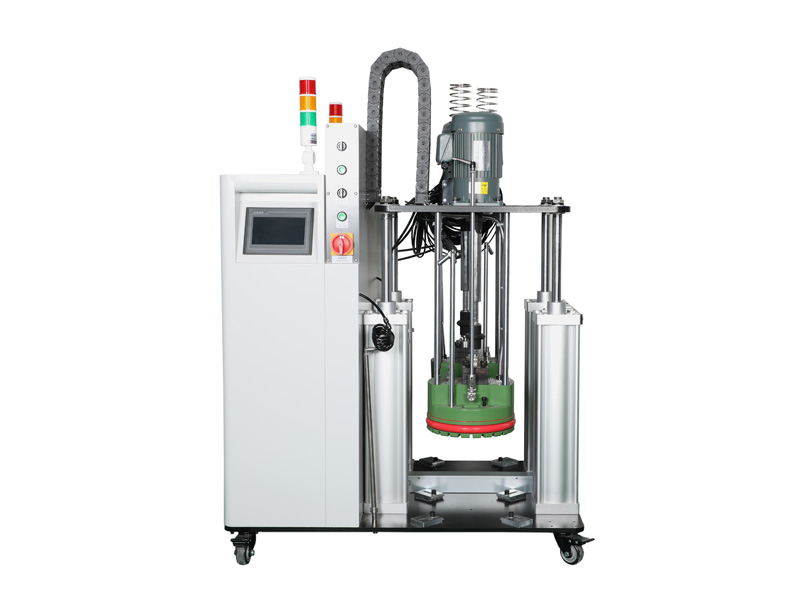
This is where a 5 gallon double plate PUR hot melt glue machine can offer a different approach.
With two independently heated adhesive containers, a double-plate configuration can allow manufacturers to prepare another PUR adhesive while the current adhesive is still being used. When the production schedule changes, the system can switch between prepared adhesive sources according to the equipment configuration and process requirements.
For manufacturers handling multiple products and adhesive formulas, the question is no longer simply “How large should the PUR melter be?”
It becomes:
How can the adhesive supply system keep up with a production line that needs to change products and PUR formulations frequently?
Saipu Electromechanical Device Co., Ltd focuses on hot melt adhesive spraying equipment and application solutions for packaging, leather goods, bookbinding, edge banding, wrapping, mattresses, automotive interiors, footwear, filtration and other industrial applications.

1. The Production Problem: Why Does Changing PUR Adhesive Cause Downtime?
PUR hot melt adhesive is valued for its strong bonding performance and suitability for demanding applications. However, PUR also requires careful handling because moisture exposure and uncontrolled heating can affect its processing characteristics.
For a factory running only one product with one adhesive, this may not be a major issue.
The situation changes when the factory produces several product categories.
Imagine a manufacturer running the following schedule:
| Production Order | Application | PUR Adhesive |
|---|---|---|
| Morning | Furniture wrapping | Formula A |
| Late morning | Edge banding | Formula B |
| Afternoon | Leather goods | Formula C |
| Evening | Bookbinding | Formula A |
With a conventional single adhesive container, every major adhesive change may require some combination of:
Production stoppage
Remaining adhesive removal
Equipment cleaning
Delivery-path inspection
New adhesive loading
Temperature stabilization
Trial spraying
Process adjustment
The exact downtime depends on the machine, adhesive, process and cleaning procedure, so it should be measured at the individual factory rather than assumed to have a universal value.
However, one principle is clear:
Every adhesive change creates a production-management cost.
That cost includes more than lost machine time. It can also include adhesive discarded during cleaning, operator labor and the risk of inconsistent application during restart.
2. What Is a Double-Plate PUR Glue Machine?
A double plate PUR glue machine uses two adhesive heating positions instead of one.
The basic concept is straightforward:
Plate A → PUR adhesive preparation / melting → adhesive supply
Plate B → PUR adhesive preparation / melting → adhesive supply
Depending on the system configuration, one adhesive source can support current production while the second source is prepared for the next production requirement.
This creates a more flexible adhesive supply architecture.
Instead of asking:
“How quickly can we empty and clean one adhesive container?”
the production team can ask:
“Can we prepare the next adhesive source while the current production is still running?”
That difference can be significant for multi-product factories.
The 5 gallon double plate PUR hot melt glue machine concept is particularly attractive for manufacturers that need a practical balance between adhesive capacity, floor space and production flexibility.
3. How Does the Double-Plate Design Improve Production Continuity?
The biggest potential advantage is adhesive-source switching without requiring the entire production process to stop for every changeover.
A typical operating concept can be understood in four stages.
Stage 1 — Current Adhesive Is Running
Plate A supplies PUR adhesive to the application system.
The production line continues operating normally.
Stage 2 — Prepare the Next Adhesive
The second plate can be prepared for the next approved adhesive formulation according to the equipment and adhesive manufacturer's requirements.
This allows the factory to prepare for the next production order while the current process is still active.
Stage 3 — Switch the Adhesive Supply
When production requirements change, the system can switch the adhesive supply configuration.
The exact switching procedure depends on the adhesive, machine configuration and process design.
Stage 4 — Continue Production
Once the new adhesive has reached the required processing condition, the production line can continue with the new formulation.
This is the fundamental advantage behind a double plate PUR glue machine:
The adhesive preparation process becomes less dependent on stopping the entire production line.
It does not mean that every PUR formula can be switched instantly or that cleaning is never necessary. PUR adhesive compatibility, curing behavior and contamination risk must always be evaluated before switching between formulations.
4. Why Is This Important for Multi-Industry Manufacturers?
Different industries have different bonding requirements.
A factory producing only one type of product may not need a dual-plate system.
But a diversified manufacturer may operate several processes simultaneously.
Packaging
Packaging manufacturers may work with:
Paper
Cardboard
Laminated materials
Decorative surfaces
Flexible packaging structures
Different substrates and production conditions can require different PUR formulations.
A flexible adhesive supply system helps production teams manage these changing requirements more efficiently.
Leather Goods
Leather products often require controlled adhesive application to maintain appearance and bonding quality.
Applications can include:
Bags
Wallets
Cases
Decorative leather components
Composite leather structures
For factories handling multiple product specifications, reducing unnecessary adhesive changeover interruptions can be commercially valuable.
Bookbinding
PUR adhesives are widely considered for applications where strong and durable bonding is required.
Bookbinding production may involve:
Different book sizes
Different cover materials
Different paper structures
Different production batches
A factory producing several product types may therefore benefit from a system designed around production flexibility.
Edge Banding and Wrapping
Furniture manufacturers may switch between:
Different board materials
Decorative surfaces
Edge materials
Profile specifications
A suitable double plate PUR glue machine can support a more flexible adhesive-management strategy when multiple PUR formulations are used.
5. Key Technical Parameters Buyers Should Evaluate
Choosing a double-plate system should not be based only on container capacity.
A professional purchasing evaluation should consider the complete adhesive delivery system.
| Parameter | Why It Matters |
|---|---|
| Adhesive capacity | Determines how much adhesive can be prepared |
| Number of heating plates | Supports adhesive-source flexibility |
| Heating control | Helps maintain the required adhesive processing condition |
| Pumping system | Determines adhesive delivery stability |
| Heated hose | Helps maintain adhesive temperature during transfer |
| Spray gun | Determines application method |
| Nozzle | Controls bead or spray characteristics |
| Pressure control | Influences application consistency |
| Switching design | Determines how adhesive sources are changed |
| Control system | Supports repeatable operation |
| Line integration | Determines compatibility with existing equipment |
For example, a machine with two adhesive plates but poorly matched pumping capacity may not deliver the expected production benefits.
Likewise, increasing adhesive capacity without considering heating recovery can create a different bottleneck.
The correct approach is to evaluate:
Adhesive → Heating → Pumping → Hose → Gun → Nozzle → Substrate → Production Line
as one complete system.
6. Can One Machine Switch PUR Adhesive Formulas?
This is one of the most important questions buyers should ask.
The answer is:
It depends on the adhesive formulations and the equipment configuration.
The phrase switch PUR adhesive formula should never be interpreted as “all PUR adhesives are interchangeable.”
Different PUR adhesives can have different:
Viscosities
Processing temperatures
Open times
Reaction characteristics
Substrate compatibility
Cleaning requirements
Before switching between formulations, the manufacturer should confirm compatibility with the adhesive supplier and equipment engineer.
For example, if Formula A and Formula B have substantially different processing requirements, the machine may require parameter adjustment.
If the two formulations are chemically incompatible or contamination-sensitive, additional cleaning procedures may be necessary.
Therefore, the real advantage of the dual-plate design is production flexibility, not the elimination of all adhesive-management procedures.
7. From Adhesive Changeover to Continuous PUR Spraying Production
For a multi-product factory, the ultimate objective is not simply faster adhesive replacement.
It is continuous PUR spraying production with fewer unnecessary interruptions.
Consider a factory producing three product categories.
Traditional Single-Plate Process
Production A
↓
Stop
↓
Remove remaining adhesive
↓
Clean
↓
Load Adhesive B
↓
Heat / stabilize
↓
Test
↓
Production B
↓
Stop again
↓
Repeat
This creates multiple potential interruption points.
Double-Plate Process
Plate A → Production A
Plate B → Preparation for Production B
↓
Switch according to process requirements
↓
Production B
Next adhesive preparation
This creates a more production-oriented workflow.
The actual productivity improvement should be verified through plant-level measurements, but the operating logic is clear: adhesive preparation and production scheduling can be separated more effectively.
8. Who Should Consider a 5 Gallon Double-Plate PUR System?
A 5 gallon double plate PUR hot melt glue machine may be particularly worth evaluating for factories with one or more of the following characteristics:
1. Multiple PUR Formulations
The factory regularly purchases different PUR adhesives for different products.
2. Multiple Production Lines
One equipment system may need to support different production requirements.
3. Frequent Product Changes
Production orders change frequently rather than remaining fixed for long periods.
4. High Cost of Downtime
Even short production interruptions can affect delivery schedules.
5. Multiple Industrial Applications
The company works across packaging, furniture, bookbinding, leather goods, edge banding or wrapping.
6. Equipment Integration Projects
The manufacturer is integrating adhesive application equipment into automated production lines.
For a single-product factory with very stable production, however, a conventional single-plate system may remain a more economical option.
That is why equipment selection should begin with the production schedule, not simply the machine specification.
9. What Should Buyers Ask Before Ordering?
Before purchasing a double plate PUR glue machine, buyers should provide the supplier with detailed process information.
Adhesive Information
PUR adhesive brand
Product model
Viscosity
Recommended temperature
Packaging format
Required processing conditions
Production Information
Product type
Production speed
Working hours per day
Number of shifts
Adhesive consumption
Number of adhesive changes per week
Application Information
Spray or bead application
Required coating width
Number of glue guns
Application distance
Automatic or manual operation
Integration Information
Existing production line
PLC or control requirements
Available power supply
Installation space
Required communication interface
The more complete this information is, the more accurately the supplier can recommend the appropriate configuration.
10. Why Work With Saipu Electromechanical Device Co., Ltd.?
For adhesive equipment, the machine itself is only part of the solution.
The application process is equally important.
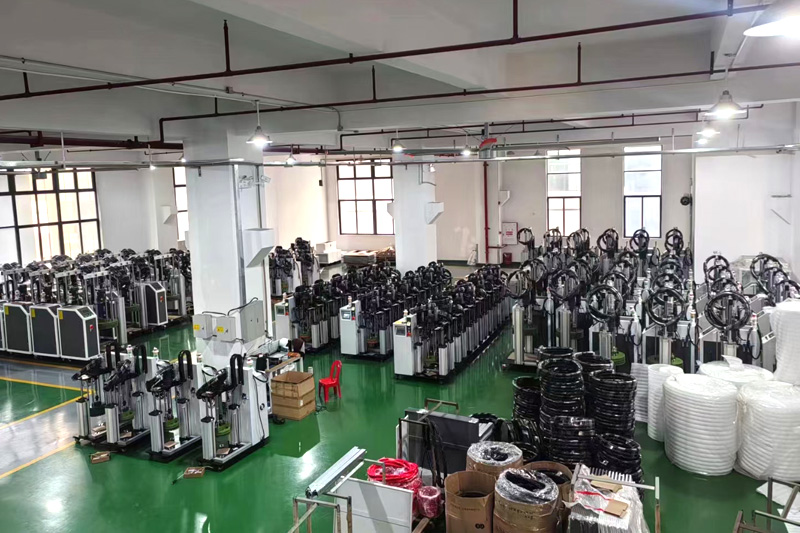
Saipu Electromechanical Device Co., Ltd specializes in the R&D, manufacturing, marketing and after-sales service of hot melt adhesive spraying machinery.
Its equipment solutions cover a broad range of industrial applications, including:
Mattress bonding
Automotive interiors
Packaging
Leather goods
Footwear
Bookbinding
Furniture
Edge banding
Profile wrapping
Courier bags
Handle bags
Air filtration
Composite materials
This application range is important because adhesive equipment should be selected according to the actual production process.
For a customer considering a switch PUR adhesive formula project, Saipu can evaluate the complete process, including adhesive supply, heating, spraying, application pattern and production-line requirements.
The goal is not simply to sell a machine.
The goal is to help the customer build a more stable adhesive application process.
11. Saipu's Approach: Equipment + Process + Application Support
A successful PUR adhesive project normally involves several stages.
① Application Assessment
Understand the customer's products, materials and production requirements.
② Adhesive Evaluation
Confirm the PUR adhesive characteristics and processing conditions.
③ Equipment Configuration
Select the appropriate melting capacity, heating system, pump, hose and application gun.
④ Process Matching
Determine suitable spraying or dispensing parameters.
⑤ Machine Commissioning
Test the equipment and adjust the operating parameters.
⑥ Production Support
Provide technical guidance for integration and ongoing operation.
This approach is especially useful for customers who are purchasing industrial adhesive equipment for the first time.
12. FAQ
What is the main advantage of a double-plate PUR glue machine?
Its primary advantage is greater adhesive-source flexibility. One adhesive source can support current production while another can be prepared for a subsequent production requirement, depending on system configuration.
Can a double-plate system eliminate PUR adhesive cleaning?
Not necessarily. Cleaning requirements depend on the adhesive formulations, contamination risks and manufacturer recommendations. Some formula changes may still require cleaning.
Can one machine handle different PUR adhesives?
Potentially, yes. Compatibility must be evaluated based on the adhesive formulations, processing temperatures, viscosity and equipment configuration.
Is a 5 gallon double-plate PUR system suitable for small factories?
It can be suitable for small and medium manufacturers with frequent product changes, but capacity should be selected according to actual adhesive consumption and production requirements.
Can the equipment integrate with an automatic production line?
The appropriate configuration can be designed according to the customer's production-line requirements, application method and control architecture.
13. Conclusion: Build Flexibility Into the Adhesive Supply System
For manufacturers operating multiple product categories, adhesive changeover can become an overlooked source of production downtime.
A conventional single-plate system may work perfectly well when one adhesive is used continuously. But when a factory needs to move between packaging, leather goods, bookbinding, edge banding, wrapping and other applications, the production requirements become more complicated.
A 5 gallon double plate PUR hot melt glue machine offers a more flexible approach by providing two adhesive preparation positions and supporting a more efficient adhesive-changeover workflow.
The real benefit of a double plate PUR glue machine is not simply having two plates.
It is the possibility of connecting adhesive management with production scheduling.
When properly configured, this approach can help manufacturers work toward more stable continuous PUR spraying production, reduce unnecessary production interruptions and better accommodate multiple PUR adhesive formulations.
For factories considering whether to switch PUR adhesive formula frequently, the right starting point is a process evaluation—not simply a machine quotation.
Saipu Electromechanical Device Co., Ltd can help manufacturers, equipment integrators and international machinery buyers evaluate their adhesive type, production requirements and application process before selecting a suitable PUR hot melt solution.
Looking for a Flexible PUR Hot Melt Adhesive Solution?
Share your adhesive specifications, application requirements and production targets with the Saipu technical team.
Website: Saipu Electromechanical Device Co., Ltd.
A more flexible adhesive supply system may be the next step toward a more flexible production line.