



Can One-Set Hot-Melt Spray Adhesive Equipment Meet Bonding Demands Across Mattress, Automotive Interior and Filter Manufacturing?
2026-08-21 10:23In modern manufacturing, adhesive application is no longer a simple “apply glue and press two materials together” process. Production lines increasingly require stable adhesive output, accurate spray patterns, controlled glue consumption and easy process adjustment.
This raises an important question for manufacturers working with different products:
Can one set of hot-melt spray adhesive equipment meet the bonding requirements of mattress production, automotive interior assembly and filter manufacturing?
The answer can be yes—but only when the equipment is correctly configured for the adhesive, substrate, application pattern and production speed.
For manufacturers, the real value is not having one machine that performs exactly the same operation everywhere. It is having a flexible hot-melt adhesive platform that can adapt to different application requirements through suitable heating, pumping, hose, gun and nozzle configurations.
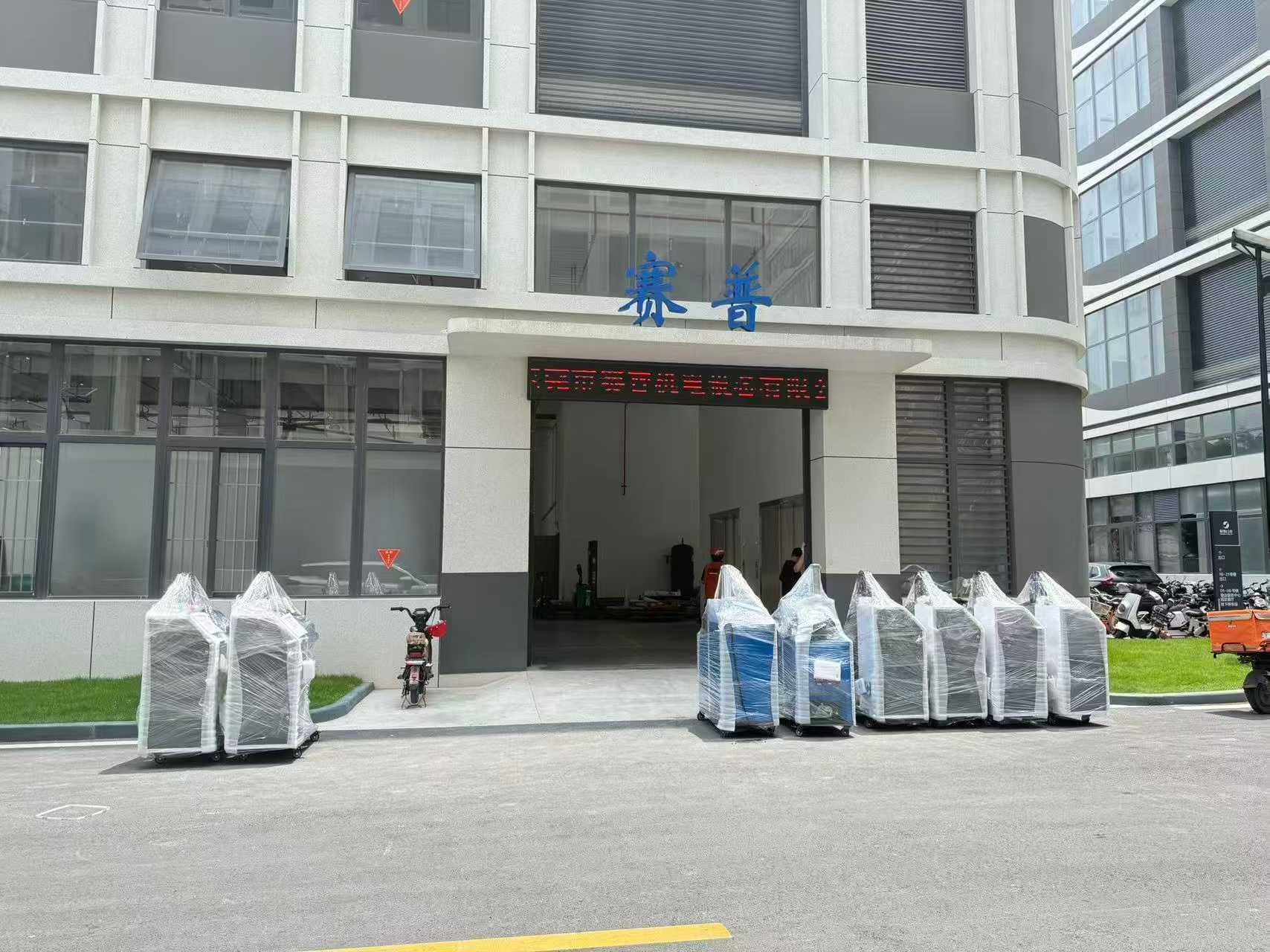
As a manufacturer specializing in hot melt adhesive spraying machinery, Saipu Electromechanical Device Co., Ltd develops equipment for a wide range of industrial applications, including mattresses, automotive components, air filters, packaging, furniture, hygiene products and other adhesive-intensive manufacturing processes.
So, how far can one hot-melt spraying system actually go?
1. What Is Hot-Melt Spray Adhesive Equipment?
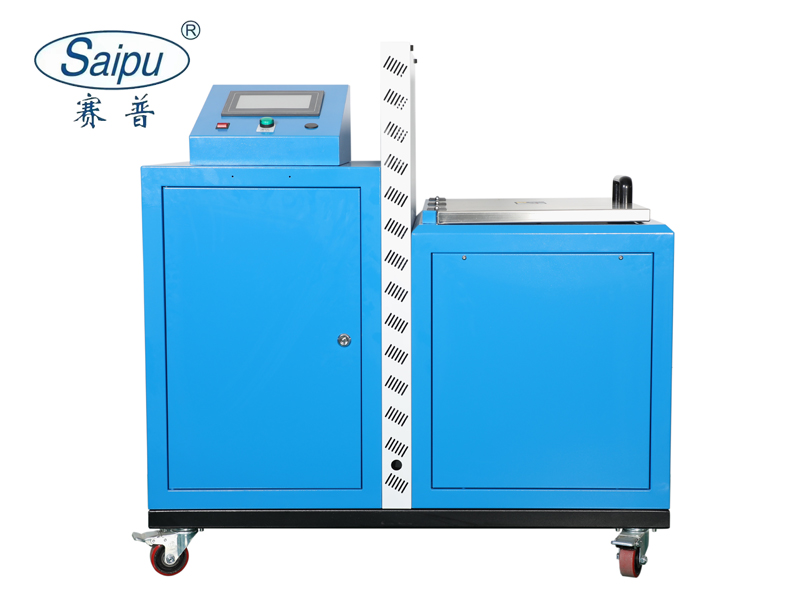
Hot-melt spray adhesive equipment is an industrial adhesive application system designed to melt solid hot-melt adhesive, transport it under controlled pressure and apply it onto a substrate through a spray gun or specialized nozzle.
A typical system includes:
Hot-melt adhesive melter
Heating tank or adhesive reservoir
Precision temperature control
Gear pump or adhesive delivery system
Heated hose
Spray gun
Nozzle or spray head
Electrical control system
Optional automatic or robotic integration
Unlike manual glue application, an industrial system can continuously control the adhesive temperature, pressure and application pattern.
The basic workflow is straightforward:
Solid adhesive → Heating → Melting → Pumping → Heated delivery → Spraying → Bonding
The challenge begins when manufacturers want to use the same basic equipment platform for very different products.
A mattress may require a wide, continuous or spiral spray pattern. Automotive interior components may need controlled bead application around complex contours. Filters may require distributed adhesive patterns over large media areas.
That is why equipment flexibility matters.
2. Can One Hot-Melt System Really Handle Three Industries?
The short answer is:
One equipment platform can potentially support multiple applications, but the configuration must be matched to the production process.
Consider the differences:
| Application | Typical Bonding Requirement | Preferred Application | Key Equipment Concern |
|---|---|---|---|
| Mattress | Large-area bonding | Spiral / spray / web-like pattern | Coverage and adhesive distribution |
| Automotive Interior | Accurate structural or trim bonding | Bead / spray / controlled line | Precision and repeatability |
| Air Filter | Media and frame bonding | Bead / intermittent / spray | Controlled adhesive volume |
| Furniture | Panel and component bonding | Bead / spray | Production speed |
| Packaging | Fast carton sealing | Bead / slot / spray | Cycle time |
| Hygiene Products | High-speed continuous bonding | Spiral / spray | Stability and synchronization |
This comparison demonstrates why simply asking for the “most powerful glue machine” is not enough.
The correct question is:
Can the equipment provide the right adhesive output and application pattern for each production process?
This is where Saipu Electromechanical Device Co., Ltd focuses its engineering approach.
3. Mattress Manufacturing: Large-Area Bonding Without Excessive Glue
Mattress production is one of the most demanding applications for hot-melt adhesive spraying.
A mattress may contain foam, fabric, nonwoven materials and other layers that need to be bonded efficiently without creating hard spots or excessive adhesive accumulation.
A conventional manual application process can create several problems:
Uneven glue distribution
Excessive adhesive consumption
Inconsistent bonding strength
Operator fatigue
Slow production speed
Difficult process repeatability
A properly configured hot-melt spray system can distribute adhesive over a larger area with a more consistent pattern.
Typical Application Methods
Depending on the adhesive and substrate, manufacturers may use:
Spiral spraying
or
Continuous spray patterns
or
Controlled adhesive lines
The objective is not necessarily to cover the entire surface with adhesive.
Instead, the adhesive pattern should provide sufficient bonding points while minimizing unnecessary adhesive consumption.
Example of Process Evaluation
Suppose a production line previously uses 18 kg of adhesive per production shift.
After equipment optimization, the manufacturer should compare:
Adhesive consumption per mattress
Qualified product rate
Production output per hour
Operator count
Rework rate
Rather than claiming a universal percentage reduction, manufacturers should conduct a controlled before-and-after test using the same adhesive and production conditions.
This is a more reliable way to evaluate the real value of a hot-melt spraying solution.
4. Automotive Interior Manufacturing: Precision Matters More Than Simply Spraying Faster
Automotive interiors introduce a completely different challenge.
Applications may include:
Door panels
Headliners
Trunk components
Interior trim
Acoustic materials
Decorative fabrics
Insulation materials
Here, excessive adhesive can be just as problematic as insufficient adhesive.
Too much glue can increase material cost, create visible marks or affect the appearance of interior components.
Too little adhesive can result in:
Delamination
Edge lifting
Component movement
Bonding failure
Increased rework
For automotive applications, manufacturers therefore pay close attention to:
Temperature Stability
The adhesive must remain within the manufacturer's recommended processing temperature range.
Pressure Stability
Fluctuating adhesive pressure can affect bead or spray consistency.
Application Accuracy
The spray gun or nozzle must deliver adhesive to the required area rather than outside the bonding zone.
Repeatability
The same component should receive a similar adhesive pattern from one production cycle to the next.
This is particularly important when the equipment is integrated into an automated production line.
5. Filter Manufacturing: Controlled Adhesive Application Is Critical
Filter manufacturing may look simple from the outside, but adhesive application can directly affect product quality.
Applications include:
Air filters
Industrial filters
HVAC filters
Automotive filters
Filter frames
Filter media bonding
The adhesive may be used to connect filter media with frames or other structural components.
A poorly controlled adhesive application can result in:
Too little adhesive → insufficient bonding
Too much adhesive → higher material consumption and possible blockage
Uneven adhesive → inconsistent product quality
For this reason, filter manufacturers often require a controlled adhesive bead or spray pattern.
A flexible hot-melt system can be configured according to:
Filter dimensions
Adhesive viscosity
Application speed
Spray width
Required adhesive weight
Automatic triggering requirements
6. One System, Different Configurations
This is the key point manufacturers should understand.
A “one-set solution” does not mean that one fixed nozzle and one fixed process should be used for every product.
Instead, the equipment platform can be configured according to application requirements.
For example:
| Parameter | Mattress | Automotive Interior | Filter |
|---|---|---|---|
| Application area | Large | Medium / complex | Medium |
| Pattern | Spiral / spray | Bead / spray | Bead / spray |
| Precision requirement | Medium | High | High |
| Adhesive control | High | Very high | High |
| Automation | Optional / high | High | Medium-high |
| Nozzle selection | Wide spray | Precision nozzle | Controlled nozzle |
| Production focus | Coverage | Accuracy | Consistency |
This modular approach can make equipment investment more practical for manufacturers producing multiple product categories.
7. Key Technical Parameters Buyers Should Evaluate
When selecting hot-melt spray adhesive equipment, do not focus only on tank capacity.
A complete evaluation should include:
| Technical Parameter | Why It Matters |
|---|---|
| Adhesive capacity | Determines production continuity |
| Heating power | Influences melting and recovery performance |
| Temperature control | Protects adhesive processing consistency |
| Pump capacity | Determines adhesive delivery capability |
| Working pressure | Affects spray and bead stability |
| Hose heating | Prevents adhesive cooling in delivery |
| Spray gun type | Determines application method |
| Nozzle configuration | Controls pattern and coverage |
| Control accuracy | Supports repeatable production |
| Line integration | Determines automation compatibility |
For example, a large adhesive tank does not automatically mean higher production efficiency.
If the heating system cannot recover temperature quickly enough, production may still experience interruptions.
Similarly, a powerful pump is not automatically better if the application requires a low and precisely controlled adhesive flow.
Equipment should be selected according to the process—not according to a single specification.
8. What Should Buyers Ask Before Purchasing?
Before requesting a quotation, manufacturers should prepare several key pieces of information.
1. What adhesive will be used?
Is it:
EVA hot melt?
PSA?
PUR?
Other specialty hot-melt adhesive?
Different adhesives can have different viscosity and processing requirements.
2. What material needs to be bonded?
For example:
Foam
Fabric
Nonwoven
Plastic
Metal
Filter media
Wood
3. What application pattern is required?
Is the process:
Bead application?
Spiral spray?
Continuous spray?
Intermittent spray?
Wide-area coating?
4. What is the production speed?
Manufacturers should provide:
Pieces/hour
or
Meters/minute
rather than simply saying “high speed.”
5. How much adhesive is consumed?
If possible, provide:
grams/product
or
kg/shift
This allows engineers to evaluate the appropriate melting and delivery capacity.
9. Why Choose Saipu Electromechanical Device Co., Ltd.?
For a multi-industry adhesive application project, equipment price is only one part of the purchasing decision.
The more important question is whether the supplier understands the complete adhesive application process.
Saipu Electromechanical Device Co., Ltd specializes in R&D, manufacturing, marketing and after-sales service of hot-melt adhesive spraying machinery.
Its equipment is applied across multiple industries, including:
Mattress manufacturing
Automotive components
Air filters
Packaging
Furniture
Hygiene products
Electronics
Garment manufacturing
Footwear
Book binding
This cross-industry experience gives manufacturers an important advantage: the equipment discussion can begin with the application problem, rather than simply starting with a machine model.
For example, instead of asking:
“Which machine has the biggest tank?”
A technical discussion can begin with:
“What adhesive are you using, what is your required application pattern, how fast is your line running, and what adhesive consumption are you targeting?”
That is a much more useful starting point.
10. A Practical Way to Validate the Equipment Before Purchase
For manufacturers considering one system for multiple applications, we recommend a practical testing process.
Step 1 — Provide Product Samples
Send representative materials or product information.
Step 2 — Confirm Adhesive Information
Provide the adhesive type, viscosity and recommended processing temperature from the adhesive supplier.
Step 3 — Define the Application Pattern
Specify bead width, spray width, spiral pattern or other requirements.
Step 4 — Conduct a Trial
Test the actual adhesive on the actual substrate.
Step 5 — Measure the Results
Record:
Adhesive consumption
Production speed
Application consistency
Bonding quality
Defect rate
Operator workload
Step 6 — Optimize the Configuration
Adjust:
Temperature
Pressure
Pump speed
Nozzle
Spray pattern
Trigger timing
Only after this process can a manufacturer determine whether a common equipment platform is suitable for several applications.
11. FAQ
Can one hot-melt machine be used for mattresses and automotive interiors?
Potentially yes. However, different products may require different adhesive, nozzle and application configurations. A technical trial is recommended before production.
Can the same equipment be used for filter manufacturing?
Yes, depending on the adhesive and required application pattern. Filter applications may require precise bead or controlled spray application.
Does a larger adhesive tank always mean higher production efficiency?
No. Tank capacity is only one factor. Heating power, pump performance, temperature stability, hose heating and application speed must also match the production requirements.
What information should I provide when requesting a quotation?
Provide the adhesive type, substrate materials, application pattern, production speed, adhesive consumption and whether the machine needs to integrate with an existing production line.
Can Saipu customize the hot-melt adhesive system?
The appropriate configuration can be evaluated according to the customer's adhesive, product, application method and production requirements.
12. Conclusion: One Platform, Multiple Possibilities
Mattresses, automotive interiors and filters may seem completely different, but they share one fundamental manufacturing requirement:
The adhesive must be applied consistently, efficiently and in the right amount.
A flexible hot-melt adhesive system can potentially support different industries when its melting capacity, adhesive delivery, spray gun, nozzle and control system are correctly configured.
For manufacturers, the goal should not simply be to purchase a “universal glue machine.”
The smarter approach is to select a configurable hot-melt adhesive spraying solution that can adapt to changing products and production requirements.
With experience across packaging, furniture, automotive, hygiene, filter and other industries, Saipu Electromechanical Device Co., Ltd can work with manufacturers to evaluate adhesive type, application method, production speed and equipment configuration before selecting a suitable solution.
Looking for a Hot-Melt Adhesive Solution?
If you are planning to automate mattress bonding, automotive interior assembly, filter production or another industrial adhesive application, contact the Saipu technical team with your product and process requirements.
Website: www.saipu-adhesivemachine.com
Let the application determine the equipment—and let the right equipment make your production more stable, efficient and scalable.