


Will Upgrading to Automated Hot-Melt Spray Machine Help Manufacturers Cut Glue Waste and Boost Line Throughput?
2026-08-19 10:11In many manufacturing plants, adhesive is a small line item on the purchasing sheet—but glue waste can become a much larger production problem when it is combined with overspray, inconsistent application, manual adjustment, line stoppages, and rejected products.
This is why more manufacturers are evaluating automated adhesive application instead of relying entirely on manual glue spraying.
So, will upgrading to an automated hot-melt spray machine really help reduce glue waste and increase production throughput?
The short answer is: it can, provided the machine is correctly matched to the adhesive, substrate, coating pattern, production speed, and automation requirements.
For manufacturers in packaging, furniture, hygiene products, automotive components, filtration, footwear, textiles, and industrial assembly, the goal is not simply to spray more glue. The goal is to apply the right amount of adhesive, at the right position, at the right time, repeatedly and consistently.
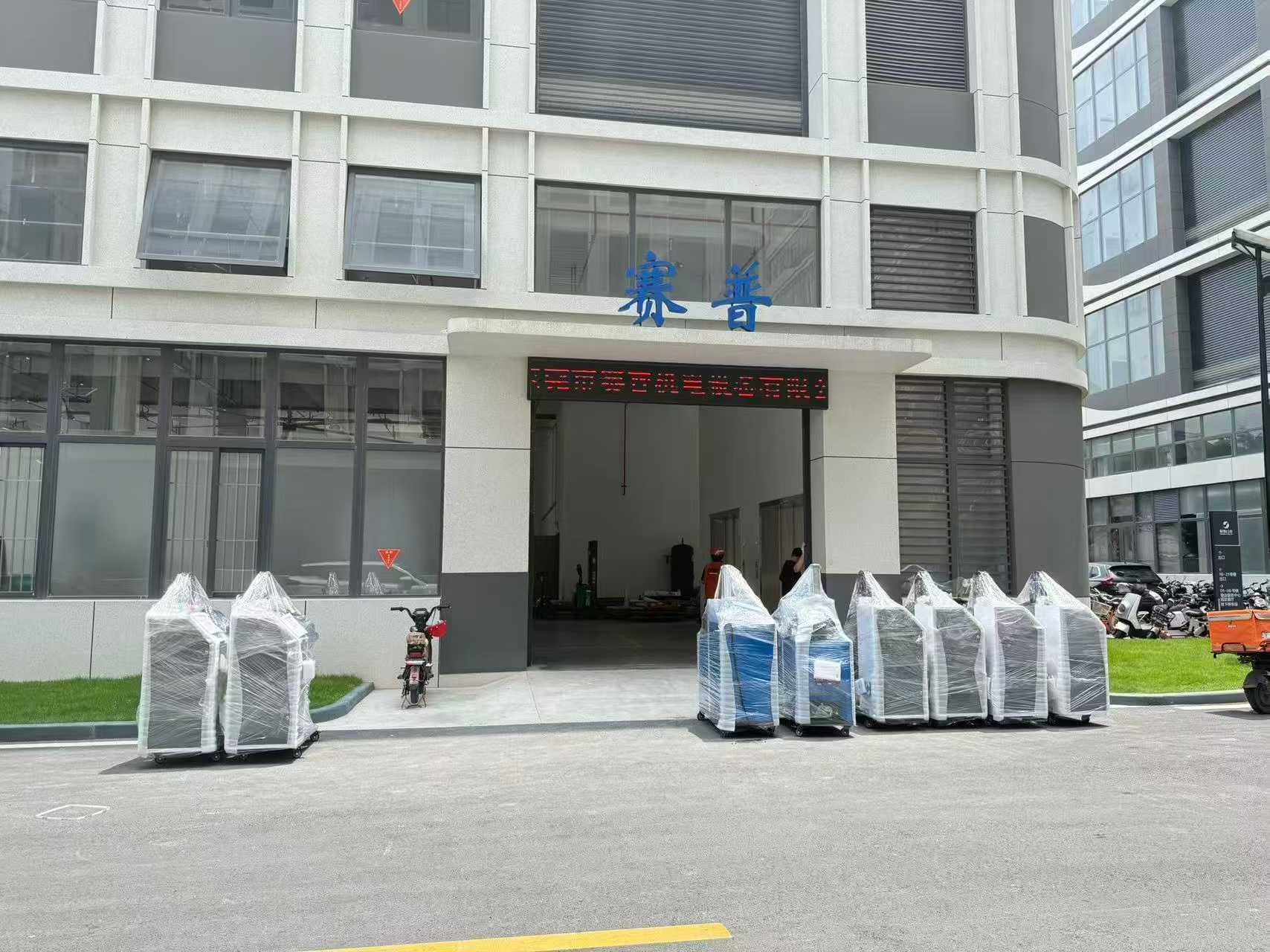
That is where Saipu Electromechanical Device Co., Ltd focuses its expertise.
1. What Is an Automated Hot-Melt Spray Machine?
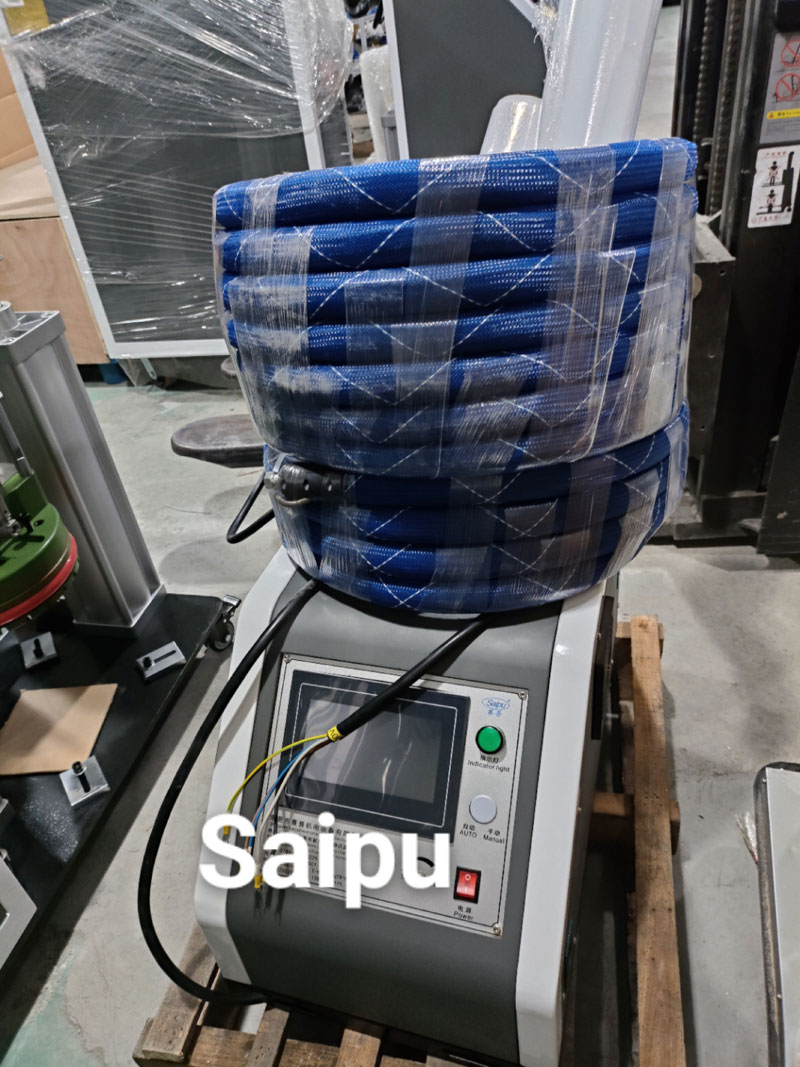
An automated hot-melt spray machine is an industrial adhesive application system that melts hot-melt adhesive, controls its temperature and delivery, and applies the adhesive onto a substrate through a spray gun, nozzle, coating head, or other application device.
A typical process can be summarized as:
Adhesive Loading → Melting → Temperature Control → Pumping → Pressure/Flow Regulation → Spraying → Bonding
Compared with manually operated glue guns, an automated system can be integrated with a production line so that adhesive application follows the movement and position of the workpiece.
The major difference is repeatability.
A manual operator may naturally change hand speed, spray distance, trigger timing, and adhesive coverage during a long shift.
An automated system can be configured to maintain a much more consistent process.
For manufacturers, this means adhesive equipment should be evaluated not only by machine price but also by:
Adhesive consumption
Application consistency
Production speed
Defect rate
Labor requirements
Line integration
Cleaning and maintenance
Long-term operating cost
2. Why Does Glue Waste Happen on Production Lines?
Before deciding whether automation is worthwhile, manufacturers should identify where adhesive waste actually comes from.
2.1 Excessive Adhesive Application
One common problem is simply applying more adhesive than the bonding process requires.
When an operator compensates for uncertain bonding performance by increasing glue quantity, adhesive consumption can rise without creating proportional value.
2.2 Uneven Spray Patterns
If the adhesive pattern is inconsistent, some areas may receive excessive glue while other areas receive insufficient coverage.
This can create a difficult cycle:
Uneven coating → bonding concern → additional glue → higher consumption → higher production cost.
2.3 Manual Triggering Errors
Manual spraying requires operators to coordinate movement and trigger timing.
During high-volume production, small differences in starting and stopping points can accumulate into unnecessary adhesive consumption.
2.4 Glue Stringing and Dripping
Improper application settings or unsuitable nozzle configurations can result in adhesive strings, droplets, or unwanted deposits.
These problems may contaminate finished products and increase cleaning requirements.
2.5 Production Line Stoppages
Glue-related stoppages can be particularly expensive when downstream equipment is already operating at high speed.
The cost is not limited to adhesive.
It can also involve:
Lost production time
Operator waiting time
Material waste
Rework
Equipment restart procedures
This is why adhesive application should be considered part of the overall manufacturing process rather than an isolated operation.
3. How Automation Can Help Control Adhesive Consumption
The biggest advantage of automated spraying is not necessarily "using less glue."
It is using adhesive more precisely.
For example, suppose a production line requires a defined spiral, dot, bead, or spray pattern.
An automated system can coordinate adhesive output with the production movement so that the application pattern is more repeatable.
The potential improvement comes from reducing uncontrolled variables.
| Production Factor | Manual Application | Automated Application |
|---|---|---|
| Spray start/stop | Operator controlled | Programmable/control-based |
| Spray position | Depends on operator | Defined application position |
| Glue quantity | Can vary | More controllable |
| Pattern consistency | Operator dependent | More repeatable |
| Production rhythm | Human dependent | Better matched to line speed |
| Repetitive work | High | Reduced |
| Process monitoring | Mainly visual | Can be integrated with line controls |
| Suitable production type | Flexible/small batches | Repetitive/high-volume production |
The actual savings will depend on the adhesive, application method, machine configuration, production speed, and operator practices.
Therefore, manufacturers should avoid evaluating automation based on a generic percentage claim.
A better approach is to measure the current process first.
4. A Practical Way to Calculate Potential Glue Savings
Manufacturers can establish a baseline using four simple measurements:
Current adhesive consumption per hour
Current production output per hour
Current rejected/reworked products
Current adhesive cost per kilogram
For example, if a production line currently consumes 20 kg of adhesive per shift and produces 2,000 finished pieces, the baseline adhesive consumption is:
20 kg ÷ 2,000 pieces = 10 g/piece
After automation, the manufacturer can compare the new adhesive consumption per piece under the same production conditions.
The important KPI is not simply total glue consumption.
It is:
Adhesive Consumption per Qualified Product
This indicator combines adhesive efficiency with actual production quality.
If glue consumption falls but the defect rate rises, the process has not necessarily improved.
A successful upgrade should aim for a better balance between:
Adhesive Consumption + Bonding Quality + Production Output + Labor Efficiency
5. Where Can Automated Hot-Melt Spraying Be Used?
Automated hot-melt spraying has applications across many industries.
Packaging
Packaging manufacturers may use hot-melt adhesive for:
Carton sealing
Box assembly
Paper bag production
Label-related bonding
Packaging components
Decorative packaging
Automation is particularly useful when products are repetitive and the adhesive pattern remains relatively consistent.
For high-volume carton production, controlled adhesive application can help reduce variation between operators and shifts.
Furniture and Woodworking
Furniture manufacturers can use hot-melt adhesive systems for:
Panel bonding
Decorative material lamination
Furniture assembly
Soft material bonding
Edge-related applications
Component assembly
When the same adhesive pattern is repeated hundreds or thousands of times, automation can make process consistency easier to maintain.
Hygiene Products
Hot-melt adhesive is widely used in disposable hygiene products such as:
Diapers
Adult incontinence products
Sanitary napkins
Disposable medical products
These production lines often operate continuously, making adhesive stability particularly important.
The equipment must be selected according to adhesive characteristics, application pattern, line speed, and product construction.
Automotive Applications
Automotive manufacturers and component suppliers may use hot-melt adhesive for:
Interior components
Sealing-related applications
Trim components
Acoustic materials
Automotive lighting-related assembly
Windshield and other bonding processes
Automotive production places additional emphasis on process repeatability and material compatibility.
For these applications, the adhesive machine should be evaluated as part of the complete manufacturing system.
Air Filters
Hot-melt adhesive can also be used in filter manufacturing where adhesive patterns may need to be applied repeatedly and accurately.
For filter production, the application process needs to consider:
Filter media
Frame material
Adhesive viscosity
Bonding area
Application pattern
Production speed
A suitable automated system can help standardize repetitive adhesive application.
6. Key Technical Parameters to Evaluate Before Automation
Not every automated machine is suitable for every production line.
Before purchasing an automated hot-melt spray system, manufacturers should evaluate several technical parameters.
| Parameter | What to Check | Why It Matters |
|---|---|---|
| Adhesive type | EVA, PSA, PUR, etc. | Determines equipment compatibility |
| Adhesive viscosity | Supplier datasheet | Influences pumping and spraying |
| Melting temperature | Adhesive specification | Determines heating requirements |
| Application pattern | Spray, spiral, dot, bead, coating | Determines gun/nozzle selection |
| Application width | Actual product dimensions | Determines spray coverage |
| Line speed | Current and target speed | Determines adhesive delivery requirements |
| Adhesive consumption | kg/h or g/product | Helps size the system |
| Tank capacity | Based on production demand | Influences refill frequency |
| Number of guns | Based on application points | Affects system configuration |
| Control method | Manual, PLC, synchronized | Determines automation level |
| Substrate | Paper, fabric, plastic, wood, metal, etc. | Affects bonding requirements |
| Cleaning requirements | Adhesive-specific | Influences maintenance planning |
The key principle is simple:
Do not choose a machine only because its advertised output looks impressive. Choose it because its process parameters match your actual production requirements.
7. When Does Automation Make Economic Sense?
Automation does not make sense for every factory.
For very low-volume production with frequent product changes, a manual or semi-automatic system may remain practical.
Automation becomes more attractive when the factory has:
High repetitive production volume
Consistent product specifications
Frequent manual glue application
High adhesive consumption
Multiple operators performing the same task
Significant variation between operators
Frequent glue-related defects
A clear requirement to increase line speed
Manufacturers should compare the investment against measurable operating costs.
A basic evaluation can include:
Annual Adhesive Savings
Annual Labor Savings
Reduced Rework Cost
Reduced Downtime Cost
=
Potential Annual Operating Benefit
The payback period can then be estimated by comparing the expected annual benefit with the equipment investment.
This approach is much more reliable than assuming automation will automatically generate a fixed percentage of savings.
8. What Should Buyers Ask a Hot-Melt Equipment Supplier?
Before purchasing, buyers should provide the supplier with actual production information.
1. What adhesive are you using?
The supplier should understand the adhesive type, viscosity, recommended temperature, and technical data.
2. What is the current line speed?
A machine designed for a slow production process may not be appropriate for a high-speed automated line.
3. How many adhesive application points are required?
This determines whether one gun, multiple guns, or a synchronized multi-gun system is more appropriate.
4. What pattern do you need?
For example:
Spiral spray
Wide spray
Dot
Bead
Intermittent spray
Continuous spray
5. What is your current glue consumption?
Actual consumption provides an important baseline for future improvement.
6. What are your biggest production problems?
Tell the supplier whether the main issue is:
Glue waste, uneven application, glue stringing, low production speed, operator workload, frequent stoppages, or product defects.
A professional supplier should design around the actual problem instead of simply recommending the most expensive machine.
9. Why Work With Saipu Electromechanical Device Co., Ltd?
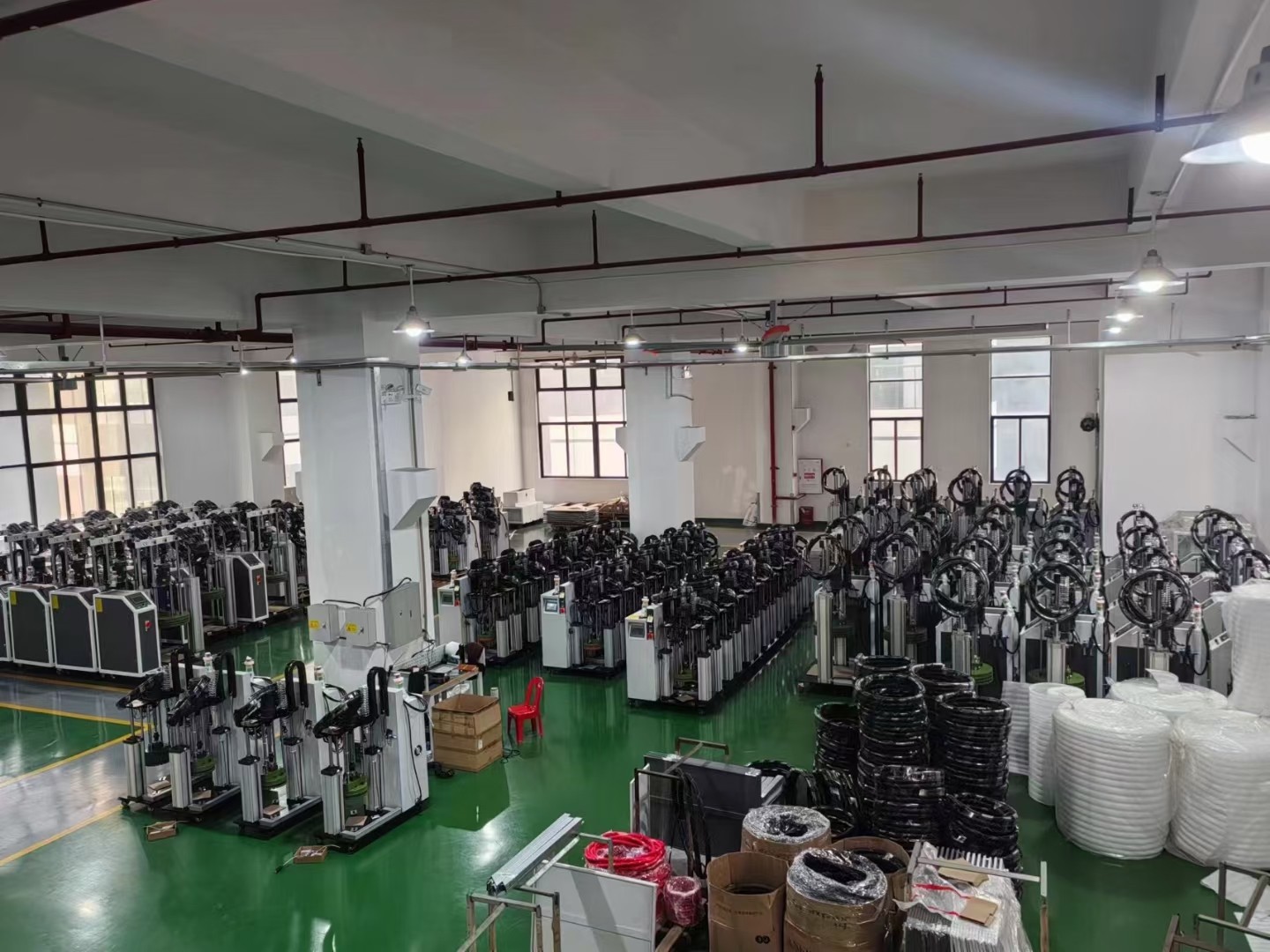
Saipu Electromechanical Device Co., Ltd specializes in the R&D, manufacturing, marketing, and after-sales service of hot-melt adhesive spraying machinery.
Our equipment is used across multiple industries, including:
Packaging
Furniture
Automotive
Electronics
Hygiene products
Air filtration
Footwear
Garment manufacturing
Bookbinding
Coating applications
This cross-industry experience matters because hot-melt adhesive application is highly process dependent.
The correct machine for a carton production line may be completely different from the right system for an automotive component or hygiene-product line.
Saipu's approach is therefore centered on understanding the customer's:
Adhesive + Material + Application Pattern + Production Speed + Output Requirement
before recommending equipment.
10. Automation Is About More Than Saving Glue
It is tempting to view an automated hot-melt spray machine simply as a way to reduce adhesive consumption.
That is only part of the picture.
The larger opportunity is to improve the entire adhesive application process.
A better process can potentially provide:
More Consistent Application
The same programmed process can be repeated across production batches.
Lower Operator Dependence
Workers spend less time manually triggering and positioning the spray gun.
Better Production Rhythm
Adhesive application can be coordinated with the production line.
Reduced Material Waste
More controlled application can help reduce unnecessary adhesive deposition.
Fewer Quality Problems
A more consistent application pattern can help reduce defects caused by insufficient or excessive adhesive.
Easier Process Management
Defined parameters make it easier to establish a repeatable production procedure.
This is especially valuable when manufacturers are trying to move from labor-intensive production toward standardized and automated manufacturing.
11. FAQ
Q1: Can an automated hot-melt spray machine reduce glue consumption?
It can help reduce unnecessary adhesive application when the previous process suffered from excessive spraying, inconsistent triggering, or poor pattern control. Actual savings depend on the production process and must be measured against a baseline.
Q2: Is automation suitable for small factories?
Yes, depending on the application. Semi-automatic equipment may be more appropriate for low-volume production, while fully automated systems are generally more attractive for repetitive and higher-volume applications.
Q3: Can one machine use different hot-melt adhesives?
Equipment compatibility depends on the adhesive type, viscosity, melting temperature, and chemical characteristics. The adhesive technical datasheet should be reviewed before configuration.
Q4: Can the system be integrated into an existing production line?
Yes, depending on the machine configuration and line requirements. Synchronization, triggering, mounting position, production speed, and control interfaces should be evaluated before installation.
Q5: How can I determine which hot-melt system I need?
Start with your adhesive type, product dimensions, application pattern, production speed, adhesive consumption, substrate, and required automation level. These parameters give the equipment supplier a technical basis for selecting the system.
Q6: Does a faster machine always mean better production efficiency?
No. Production efficiency is a combination of speed, adhesive consumption, bonding quality, defect rate, downtime, and labor requirements. Increasing speed while creating more defects does not represent a genuine improvement.
12. The Bottom Line: Should You Upgrade?
If your factory is experiencing excessive glue consumption, inconsistent spray patterns, high operator dependence, frequent adhesive-related defects, or production bottlenecks, an automated hot-melt spraying solution may be worth evaluating.
But the right question is not:
"How much does the machine cost?"
A better question is:
"How much does our current adhesive process cost us every month?"
Measure your current:
Glue consumption
Output per hour
Labor hours
Rework rate
Scrap rate
Downtime
Adhesive-related defects
Then compare these figures with the expected performance of an automated system.
At Saipu Electromechanical Device Co., Ltd, we believe effective adhesive equipment should solve a real production problem—not simply add another machine to the factory floor.
If you are planning to upgrade your adhesive application process, our team can evaluate your production requirements and recommend a suitable hot-melt spraying configuration.
Ready to Improve Your Adhesive Application Process?
Tell us your adhesive type, product, application pattern, line speed, working width, and current production problem.
Our engineers can use these details to assess whether automation is technically and economically suitable for your production line.
Saipu Electromechanical Device Co., Ltd
🌐 Official Website – Saipu Electromechanical
From controlled adhesive application to more efficient production, the right hot-melt solution starts with understanding your process.